Buenos Aires Solo Travel Guide: What I Learned from Two Weeks Alone in Argentina's Capital
I spent two weeks solo in Buenos Aires, working from cafes, eating my way through Recoleta and Palermo, and figuring out the rhythms of a city that doesn't really start until 9pm. It was one of the most rewarding solo trips I've done, and I've done a lot of them.
Buenos Aires is a city that suits solo travellers unusually well. The dining culture is relaxed about single diners. The neighbourhoods are walkable and distinct. The locals are curious about foreigners in a way that starts conversations without pressure. And the cost of living, even after recent economic shifts, means you can eat and drink at a level that would cost three times as much in London or Sydney.
This guide pulls together everything I figured out during those two weeks, plus what I've learned from return research since. If you're planning a solo trip to Buenos Aires, this is where I'd start.
I receive a commission for products you purchase through my links, at no extra cost to you. More info...
Is Buenos Aires Safe for Solo Travellers?
Yes, with the usual city-smart precautions. I felt comfortable walking around Recoleta, Palermo, and San Telmo during the day, and around the main streets of those neighbourhoods at night. Buenos Aires has a late-night culture, which means there are people around until well past midnight in popular areas. That natural foot traffic is reassuring.
The things to watch for are standard: don't flash expensive electronics, keep your phone in your front pocket, be aware of distraction scams (someone "spilling" something on you, then "helping" clean it off while a partner lifts your wallet). I didn't experience any of these, but I was aware of them.
Neighbourhoods to avoid solo, especially after dark: La Boca (beyond the tourist strip), Constitución, and parts of San Telmo south of Parque Lezama. Stick to the northern neighbourhoods and you'll be fine.
I wrote a detailed safety guide based on my experience and official advisories: Is Buenos Aires Safe? A Solo Traveller's Honest Assessment
Patrick's Tip: Register with your government's travel advisory service before you go. For Irish citizens, that's the Department of Foreign Affairs. For British travellers, FCDO. For Americans, STEP. It takes two minutes and means someone knows where you are if things go sideways.
Where to Stay Solo in Buenos Aires
Your neighbourhood choice matters more in Buenos Aires than in most cities. The barrios have distinct personalities, and the wrong one can leave you isolated or in an area that doesn't come alive until you've already gone to bed.
My recommendation: Recoleta. I stayed at the Apart San Diego, a small apart-hotel on Rodriguez Pena with no solo supplement and a location that put me within walking distance of everything I cared about. Recoleta is residential enough to feel safe at night, central enough to walk to restaurants and cultural sites, and has enough character to reward a morning wander.
Palermo is the other strong option. Younger, more cafe and bar culture, better for evening eating. It's where I'd stay on a return trip if I wanted more nightlife and less residential calm.
San Telmo works if you want the Sunday market on your doorstep, but it's rougher around the edges and thins out quickly once you leave the main streets.
I wrote a full neighbourhood breakdown with solo-specific recommendations: Best Buenos Aires Neighbourhoods for Solo Travellers
What to Eat (and Where to Eat Alone)
Buenos Aires is one of the easiest cities I've found for eating alone. Lunch is the big meal here, and plenty of restaurants are geared toward single diners during the midday rush. Nobody looks at you twice.
I ate my way through Recoleta and Palermo over two weeks. The highlights:
La Cholita (Recoleta): Proper Argentinian steak, warm room, friendly to solo diners. My first meal in the country and exactly what I needed.
Cumaná (Recoleta): Empanadas that set the standard for the rest of my trip. The beef empanada with light spice was the best I had in Argentina.
Quotidiano (Recoleta): Fresh pasta in herb butter. Rich, satisfying, and the right portion size for one person.
Le Pain Quotidien (Palermo): When I needed free wifi and a chicken tartine. Not adventurous, but reliable, and the refectory-style seating is good for solo workers.
I also learned that the local fast food scene is worth exploring. Burger 54 on Santa Fe does a solid burger with fries topped with a fried egg, and you'll spend a fraction of what a tourist-trap parrilla charges.
The service can be slower than you're used to. It's not rudeness, it's just the pace here. Adjust your expectations and you'll enjoy meals more.
The full rundown of every place I ate, with honest reviews: Buenos Aires Food: Best Lunch Spots in Recoleta and Palermo
Book a food tour in Palermo — a good way to meet other travellers while eating well
Patrick's Tip: Lunch is where the value is. Restaurants offer set menus (menu ejecutivo) at midday that cost a fraction of dinner prices for the same quality. As a solo traveller, this is your move. Have a big lunch, keep dinner light.
The Best Things to Do Solo in Buenos Aires
Teatro Colon
This is the standout cultural experience in the city. The guided tour takes you through one of the world's great opera houses, and the acoustics are genuinely remarkable. You don't need to be an opera fan to appreciate it. I went on a Tuesday afternoon and had a small group with an excellent English-speaking guide.
If you can, book a performance instead of (or as well as) the tour. Solo seats are easy to get, even at short notice, and seeing it from the auditorium at night is a different experience entirely.
My full guide with booking tips: Teatro Colon: 9 Things to Know Before You Go
Book a Teatro Colon guided tour
El Ateneo Grand Splendid
A converted theatre that's now a bookshop. National Geographic called it one of the most beautiful bookshops in the world, and for once the hype is justified. Even if you don't read Spanish, go for the architecture and the cafe on the old stage.
I spent an hour here, which was about right. It's in Recoleta, easy to combine with a morning walk and a cafe stop.
Worth a visit? My honest take: El Ateneo Grand Splendid: Is the World's Most Beautiful Bookstore Worth Your Time?
Recoleta Cemetery
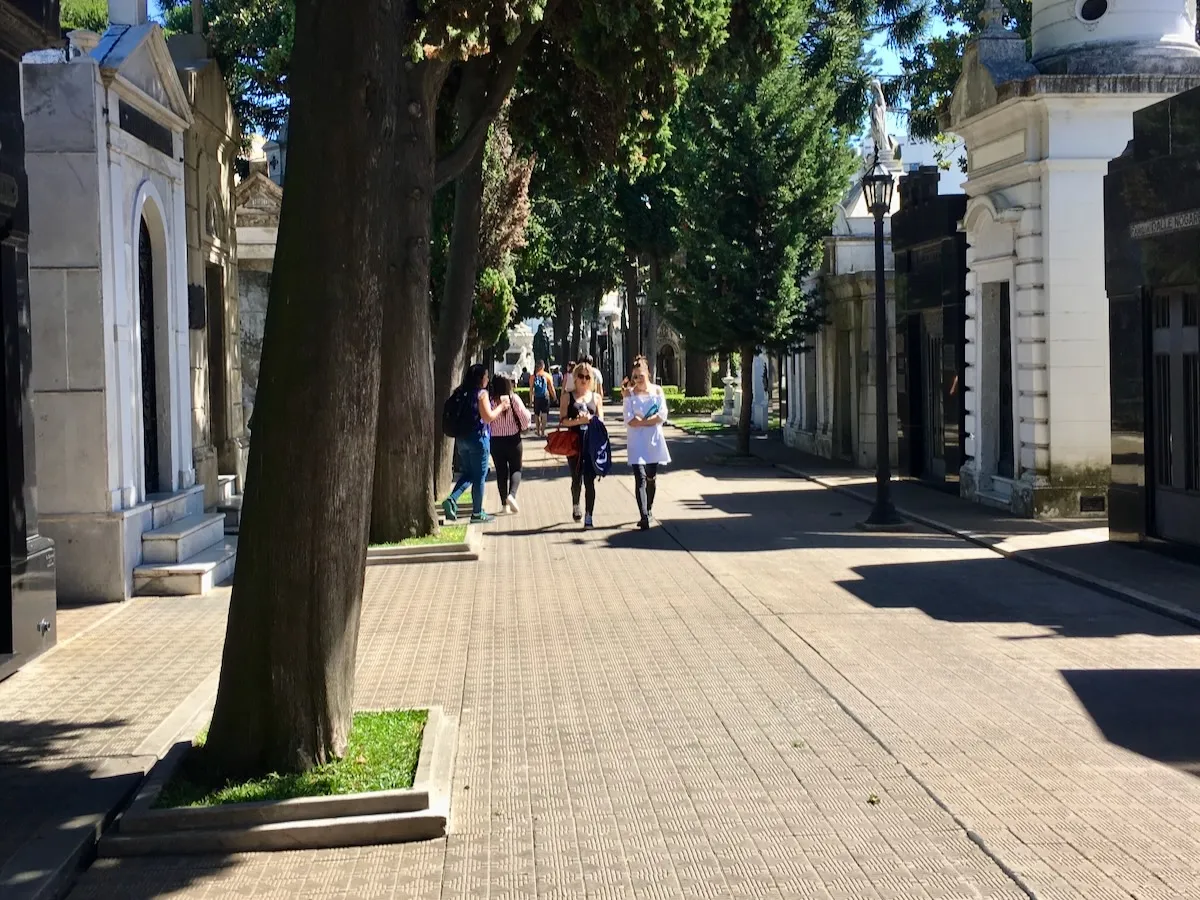
Not morbid. Genuinely fascinating. The cemetery is effectively an open-air museum of Argentine history, architecture, and ego. Finding Eva Peron's tomb is the obvious draw, but the real pleasure is getting lost in the narrow streets between the mausoleums.
Go early or on a weekday to avoid the cruise ship crowds. A guided tour adds context that you'd miss on your own.
Finding Eva Peron and making the most of your visit: Recoleta Cemetery: The Top Buenos Aires Landmark?
Book a Recoleta Cemetery guided tour
The Free Walking Tour
I'm normally sceptical about free walking tours. They tend to be fine for orientation but thin on substance. The Buenos Aires one was better than most. Our guide was a local history student who had genuine opinions about the city's politics and culture, and wasn't just reading from a script.
It's a good first-day activity. You get an overview of the city, a sense of the distances between neighbourhoods, and an easy way to meet a few people if you want company for dinner later.
My full review, including what to expect and what to tip: Buenos Aires Free Walking Tour: Worth Your Time?
Book a guided walking tour — if you'd rather a guaranteed quality guide than the free lottery
My Suggested 5-Day Solo Itinerary
You could spend a month in Buenos Aires, but five days is enough to get the essentials without rushing.
Day 1: Arrive, settle into your neighbourhood. Walk to a local cafe for lunch. Get your bearings. If you have energy, do the free walking tour in the afternoon.
Day 2: Recoleta morning. Cemetery first (go early), then walk through the weekend craft market if it's on. El Ateneo Grand Splendid is 15 minutes on foot. Lunch somewhere in Recoleta.
Day 3: Teatro Colon tour in the morning. Afternoon in Palermo for coffee and people-watching. If you're into street art, the Palermo Hollywood area has good murals. Dinner in Palermo.
Day 4: Day trip to Colonia del Sacramento in Uruguay. The ferry takes about an hour and you can do a comfortable day return. A completely different atmosphere from Buenos Aires, and one of my favourite days of the trip.
Day 5: Whatever you missed. A food tour. A tango show. A long lunch at a parrilla. Or just sit in a cafe and write, which is what I did for most of my last day.
Alternative Day 4 or 5: If Uruguay doesn't appeal, spend a day at a gaucho estancia outside the city. You'll ride horses, eat asado cooked over an open fire, and get a completely different perspective on Argentina. It works well solo because you're joining a small group anyway.
Patrick's Tip: Don't over-schedule Buenos Aires. It's not a checklist city. The best moments come from the unplanned stuff: a conversation with a waiter, a jazz bar you stumble into on a Thursday night, an extra hour in a bookshop because you're not rushing to the next sight.
Working Remotely from Buenos Aires
If you're a remote worker, Buenos Aires is one of the strongest digital nomad bases in South America. The wifi in cafes and hotels is generally reliable, the cost of living is low relative to the quality of life, and the timezone works reasonably well for US clients.
I spent mornings working from cafes in Recoleta and Palermo, and discovered the Sala de Lectura (reading room) at the Biblioteca Nacional de Maestros, which has free wifi and the kind of quiet that lets you actually concentrate. It became my go-to when I needed a few focused hours.
Argentina has a digital nomad visa for stays beyond 90 days. If you're considering a longer stint, it's worth looking into the requirements early, as the paperwork takes time.
Patrick's Tip: Co-working spaces in Palermo are plentiful, but honestly, the cafe culture here is so strong that you may not need one. Find a place with good wifi, order a cortado, and you'll get more done than you would in an office. Nobody rushes you out.
Experiences Worth Pre-Booking
Don't just wander. Book at least one or two structured experiences. They're better value than you'd expect, and for solo travellers, they're an easy way to spend a few hours with other people.
- Food tour in Palermo or San Telmo: a knowledgeable local guide shows you the difference between a tourist parrilla and where porteños actually eat
- Tango show: skip the dinner-shows in La Boca. Book at Cafe Tortoni or a more intimate milonga where locals dance
- Cooking class: learn to make empanadas or asado properly. Works well solo, and you'll use the skills at home
- Wine tasting: Argentina does Malbec better than anywhere. A structured tasting is more educational than just ordering another glass at dinner
Practical Information
Best time to visit: March to May (autumn) or September to November (spring). I went in early May and the weather was perfect, around 18-22°C during the day. Summer (December-February) is hot and humid, and a lot of porteños leave the city. Winter (June-August) is mild but grey.
How long to stay: 5-7 days is the sweet spot. Enough to explore properly without running out of things to do.
Currency: Argentine peso. The currency situation is complicated and changes frequently. As of early 2026, the gap between official and informal exchange rates has narrowed significantly under the current government's economic reforms. The peso still moves fast enough that your budget can shift between booking and arrival. Lock in hotels with free cancellation, monitor exchange rates in the fortnight before you fly, and carry a mix of USD cash and a fee-free card. Some smaller hotels still quote in dollars and accept cash at a better rate than official exchanges. Check current rates before you go.
Visa: No visa required for US, Canadian, EU, UK, or Irish citizens for stays up to 90 days. You'll get a stamp on arrival.
Getting there: Direct flights from Miami, New York, Frankfurt, Madrid, and Barcelona. Most other routes require a connection. International flights land at Ezeiza (EZE), about 45 minutes from downtown. If you're arriving from elsewhere in South America, you might land at the closer Aeroparque (AEP) instead.
Getting around: Walking handles most of it in the central neighbourhoods. The Subte (metro) is cheap and efficient for longer distances. Taxis are affordable but use the meter or agree a price first. Uber works but exists in a legal grey area.
Language: Spanish. English is less common than you'd expect outside tourist areas. Learn the basics: por favor, gracias, la cuenta (the bill), and the magic phrase "para uno" (for one), which gets you a solo table without the awkward pause.
eSIM: Get one before you land. Having maps, translation, and messaging on arrival makes everything easier.
Airport transfer: Ezeiza airport is about 45 minutes from the city centre. A private transfer removes the stress of navigating taxis on arrival.
FAQ
Is Buenos Aires good for solo travellers? Yes. It's one of the better cities I've visited solo. The dining culture is relaxed about single diners, the neighbourhoods are walkable, and the locals are friendly without being intrusive. Safety is manageable with normal precautions.
How many days do you need in Buenos Aires? Five to seven days is ideal. Less than four feels rushed. More than ten and you'll start running out of new attractions, though the cafe and food culture can keep you occupied for weeks.
Is Buenos Aires safe to walk around at night? In the main tourist neighbourhoods (Recoleta, Palermo, parts of San Telmo), yes. Stick to well-lit streets and areas with foot traffic. Avoid La Boca after dark, and use common sense about displaying valuables. Read my full safety guide.
What's the best neighbourhood to stay in solo? Recoleta for a residential feel with easy access to cultural sites. Palermo for younger energy, more restaurants, and better nightlife. Read my full neighbourhood guide.
Can you eat alone in Buenos Aires without feeling awkward? Absolutely. Lunch culture is strong, restaurants are used to solo diners, and the cafe scene is built for people spending time alone. It's one of the most comfortable cities I've found for eating by myself.
What's the best time of year to visit Buenos Aires? March to May (autumn) or September to November (spring). Pleasant temperatures, fewer tourists, and the city is in full swing. Avoid January if you can, as half the city empties for summer holidays.
Do I need to speak Spanish? Basic Spanish helps a lot. Buenos Aires is less English-friendly than you might expect. Learn enough to order food, ask for directions, and be polite. A translation app on your phone covers the rest.