Buenos Aires Free Walking Tour: Worth Your Time? (A 50+ Solo Traveler’s Verdict)
On my first trip to Buenos Aires in 2017, I needed context. Fast.
As a European, I’d fallen into that lazy assumption that the “New World” is… well, new. Argentina’s history runs deep (political, cultural, architectural) and wandering aimlessly wasn’t going to crack it. I needed a guide who could decode what I was seeing.
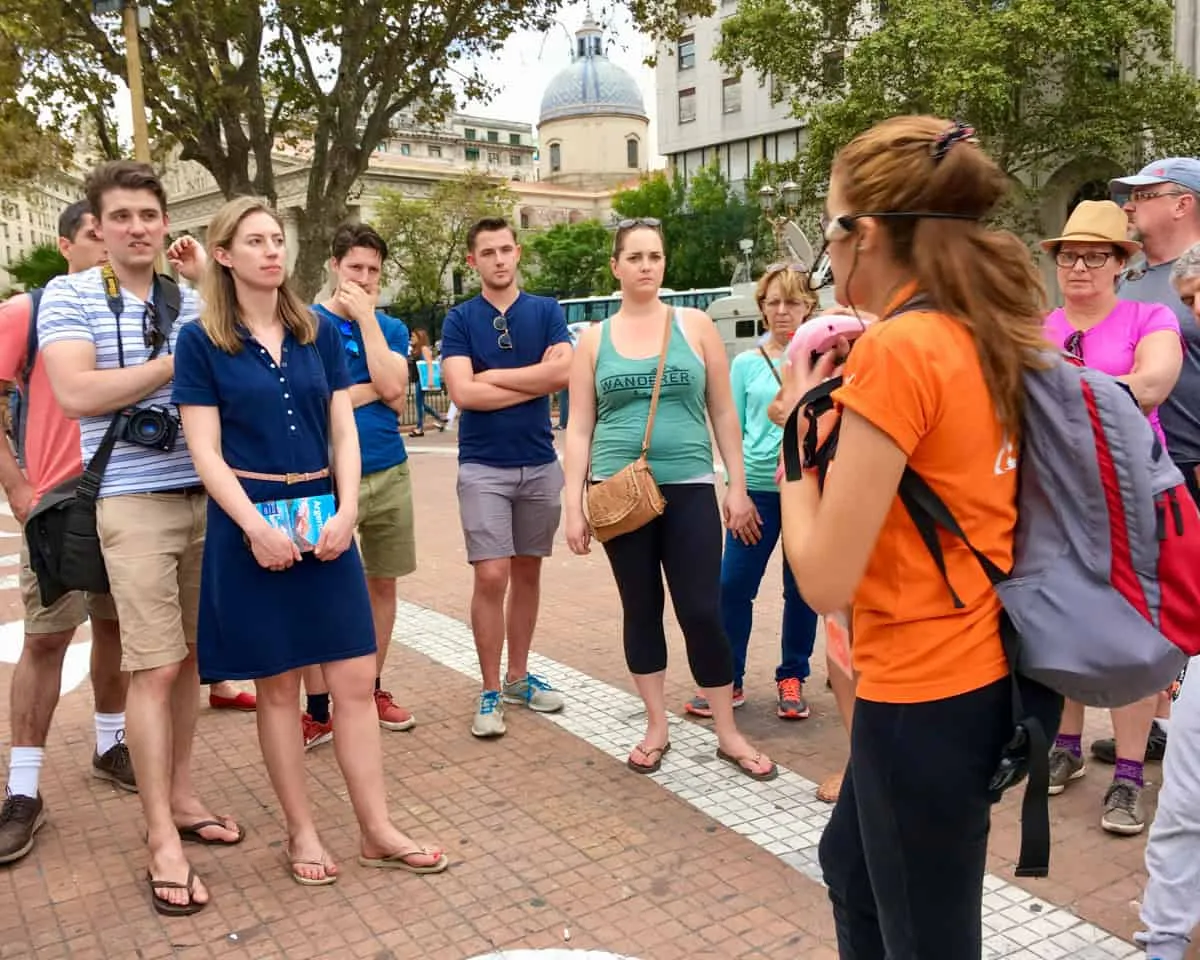
So I joined Buenos Aires Free Walks’ city center tour. Three hours, pay-what-you-feel, led by a porteño who actually knew their stuff. For a $10 USD tip, I got historical immersion, urban orientation, and answers to questions I didn’t know I had.
Here’s whether it’s worth your time and how to make the most of it..
Understanding “Free” Walking Tours: What You’re Actually Paying For
Let’s be clear: these tours aren’t free. They’re tip-based.
Buenos Aires Free Walks (the most established operator) openly states they expect at least $10 USD per person. That’s fair. It keeps tours accessible while ensuring guides earn a living wage.
How it works:
No upfront payment or booking required (though booking online reserves your spot)
Join the tour, pay nothing to start
Tip at the end based on value received
What I paid: $10 USD for a 2.5-hour tour. Comparable to a decent lunch, far cheaper than a private guide ($80-150 USD), and better value than wandering aimlessly with a guidebook.
If you found the guide engaging and left with genuine insights, tip accordingly. If it felt generic or rushed, adjust. This model works because guides are incentivized to deliver.
Why Free Walking Tours Make Sense for Solo Travelers Over 50
I’m not backpacking at 22. I don’t need to save €5 on a transfer or sleep in hostels. But I also don’t waste money on experiences that don’t deliver.
Free walking tours hit a sweet spot:
Orientation without commitment: First morning in Buenos Aires? This gets you oriented fast. Major landmarks, neighborhood layouts, where to eat, what to avoid.
Social without forced socializing: You’re in a group (10-20 people typically), so there’s safety and a chance to chat if you want. But you’re not locked into a day-long bus tour with strangers.
Quality context: These aren’t volunteers reading Wikipedia. Buenos Aires Free Walks employs professional guides (often history graduates, journalists, or cultural specialists) who bring depth.
Flexibility: Don’t like the group vibe? You can leave. Want to revisit a spot mentioned? You know where it is now.
For solo travelers who value efficiency and intelligence, this is a smart first move. You’re buying insider knowledge cheaply so you can spend the rest of your trip making informed choices.
My Experience: the Buenos Aires City Center Tour
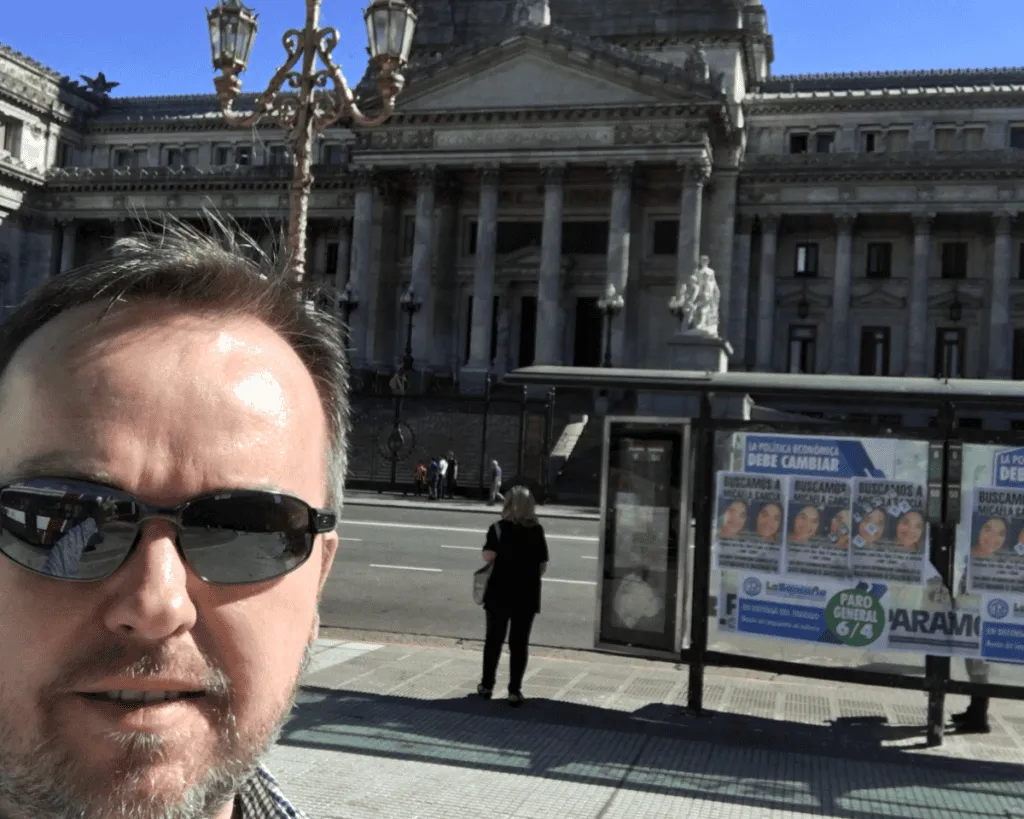
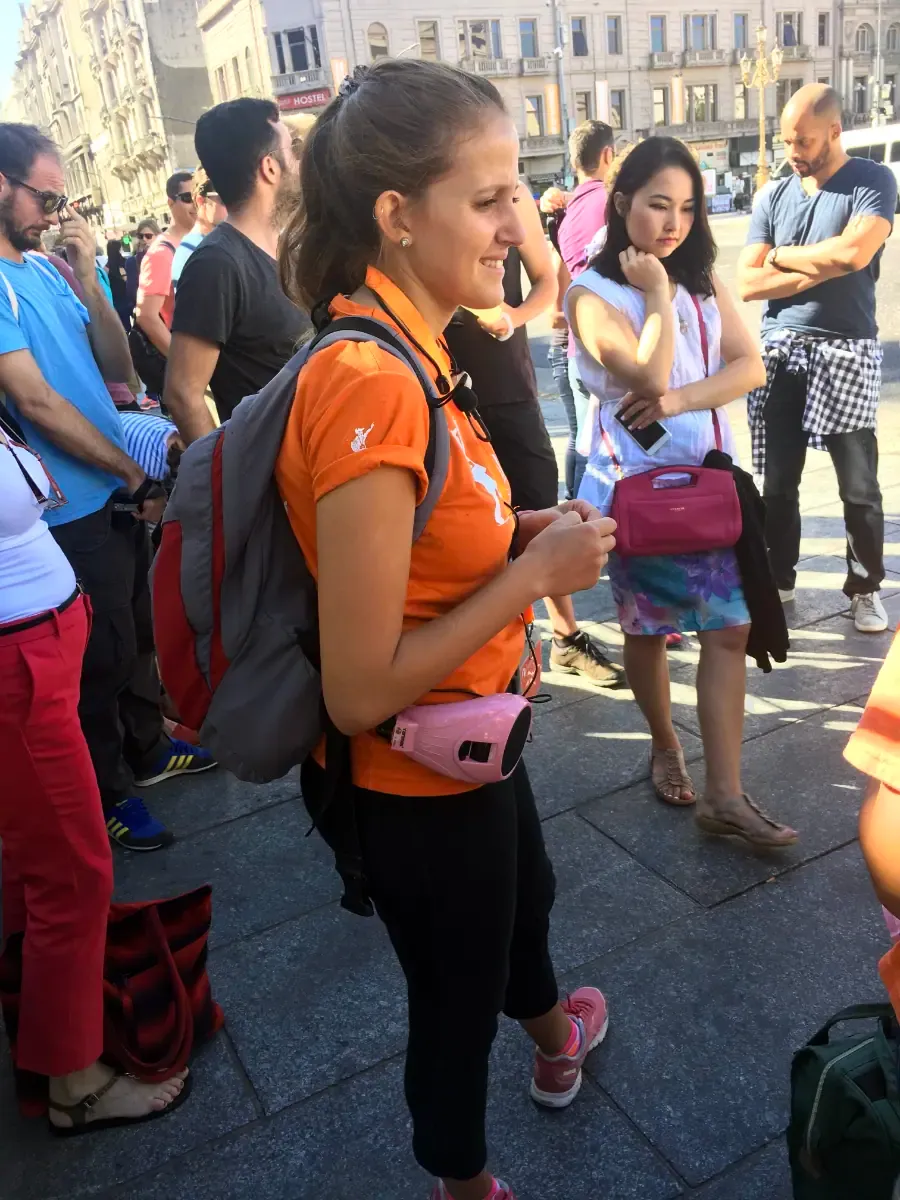
Meeting point: National Congress building, 10:30 AM Guide: A porteña in a bright orange Buenos Aires Free Walks t-shirt (impossible to miss) Group size: About 15. Mix of Australians, Americans, Europeans, a couple from Japan Duration: Officially 2.5 hours; ours ran closer to 3
What We Covered
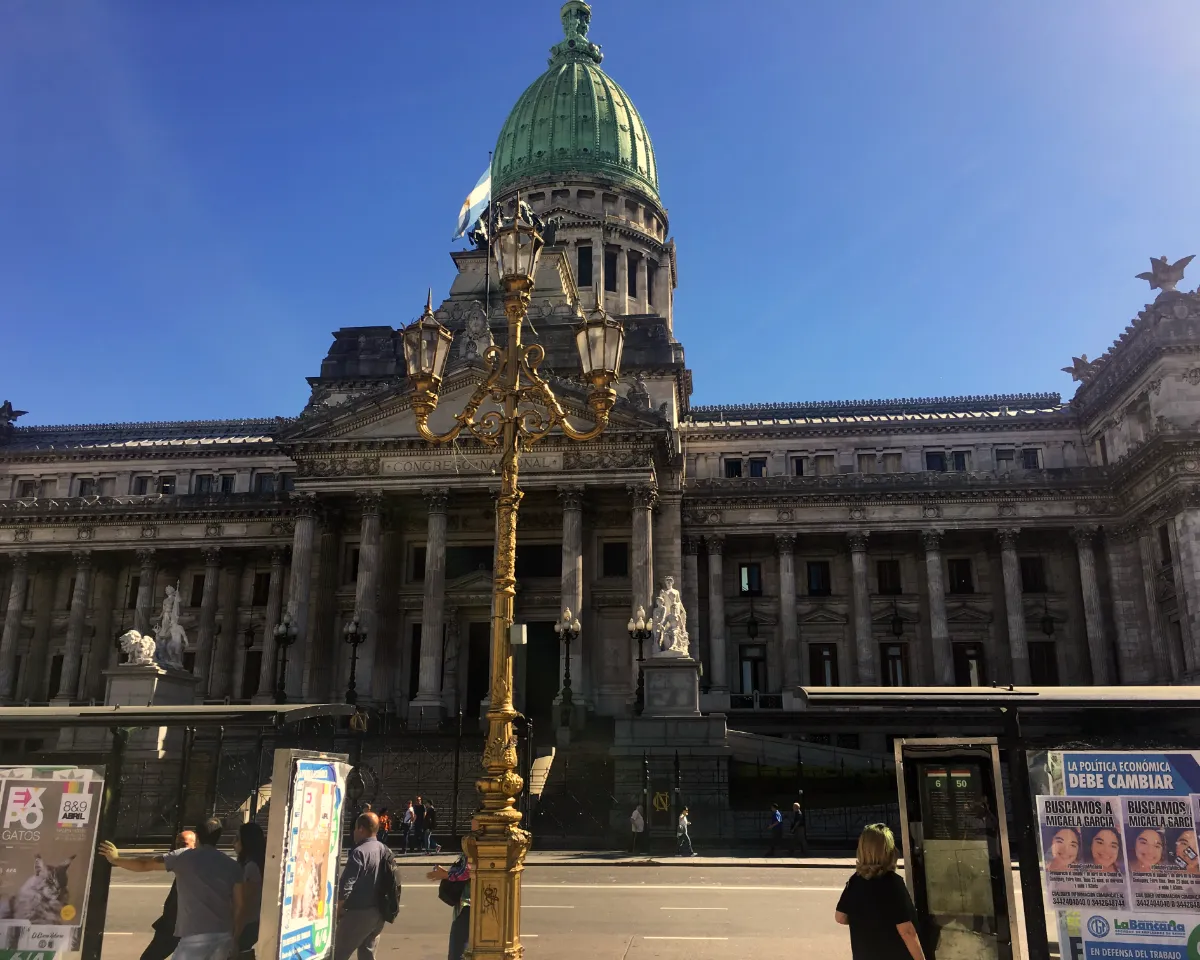
National Congress
We started with Argentina’s legislature. Neoclassical dome, European architectural aspirations, and the political theatre that still plays out here. The guide didn’t just describe the building; she contextualized why Buenos Aires styled itself as the “Paris of South America.”
El Pensador by Rodin
-
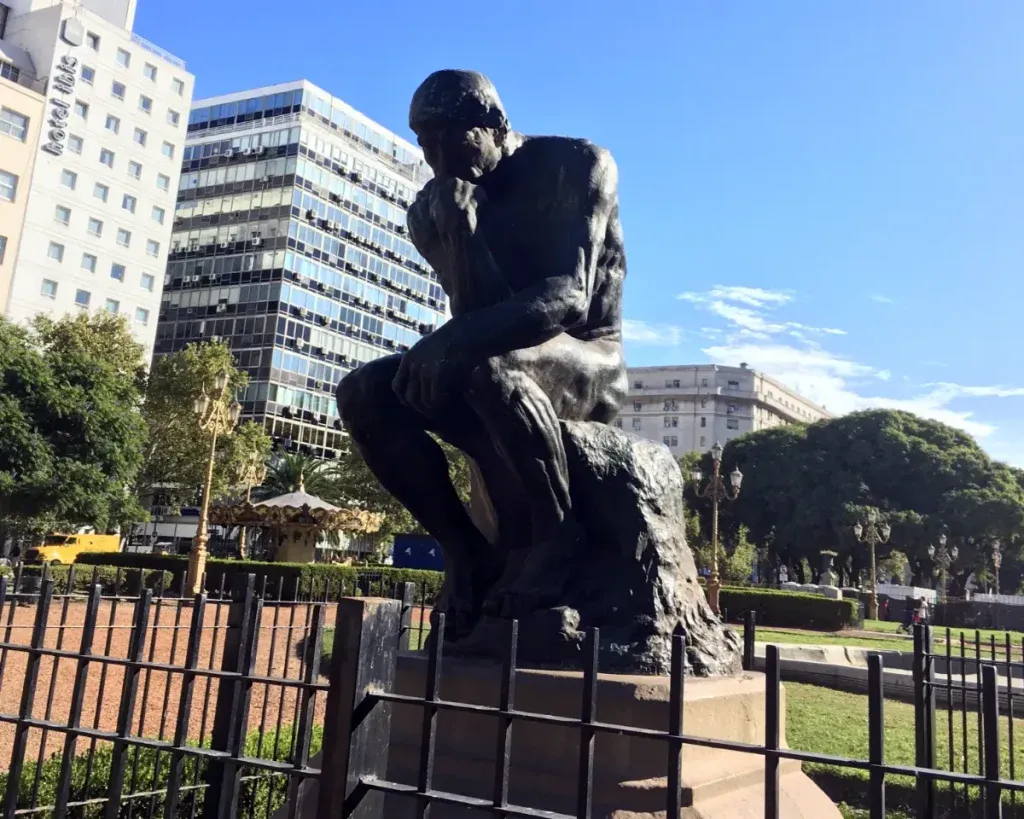
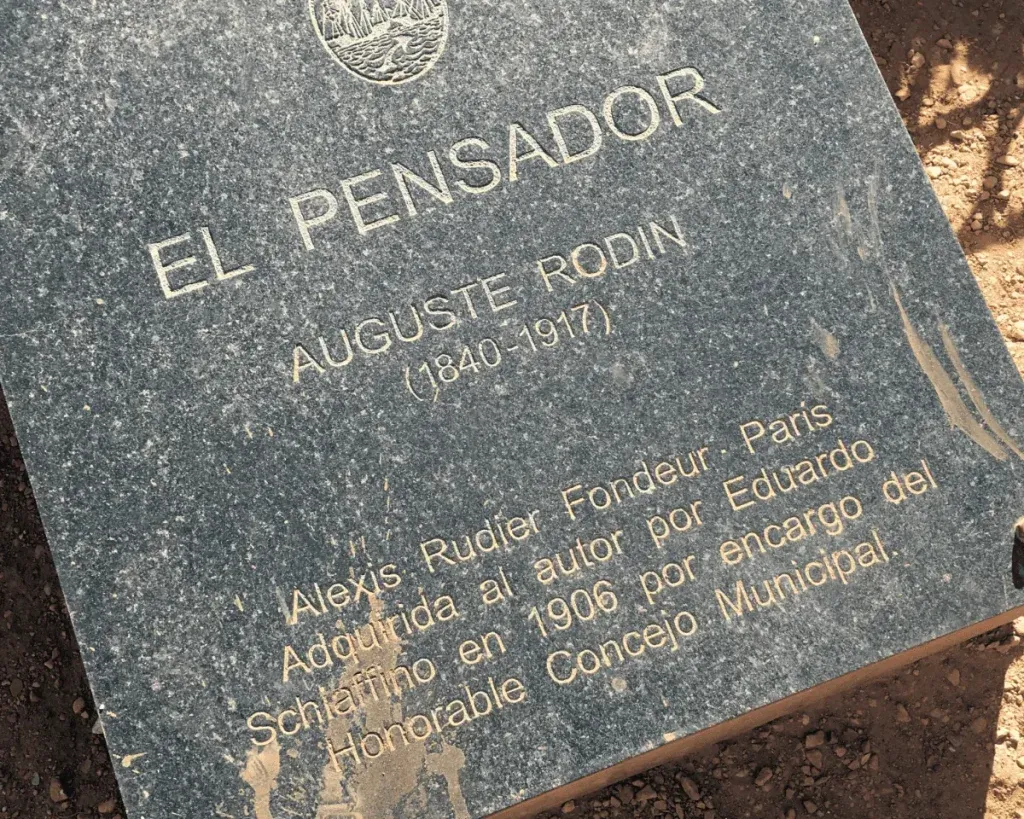
A bronze copy sits near Congress. The guide used it to talk about Argentina’s Belle Époque ambitions and the tension between contemplation and the often chaotic politics next door. Small detail, but it set the tone: this wasn’t going to be surface-level.
Avenida de Mayo
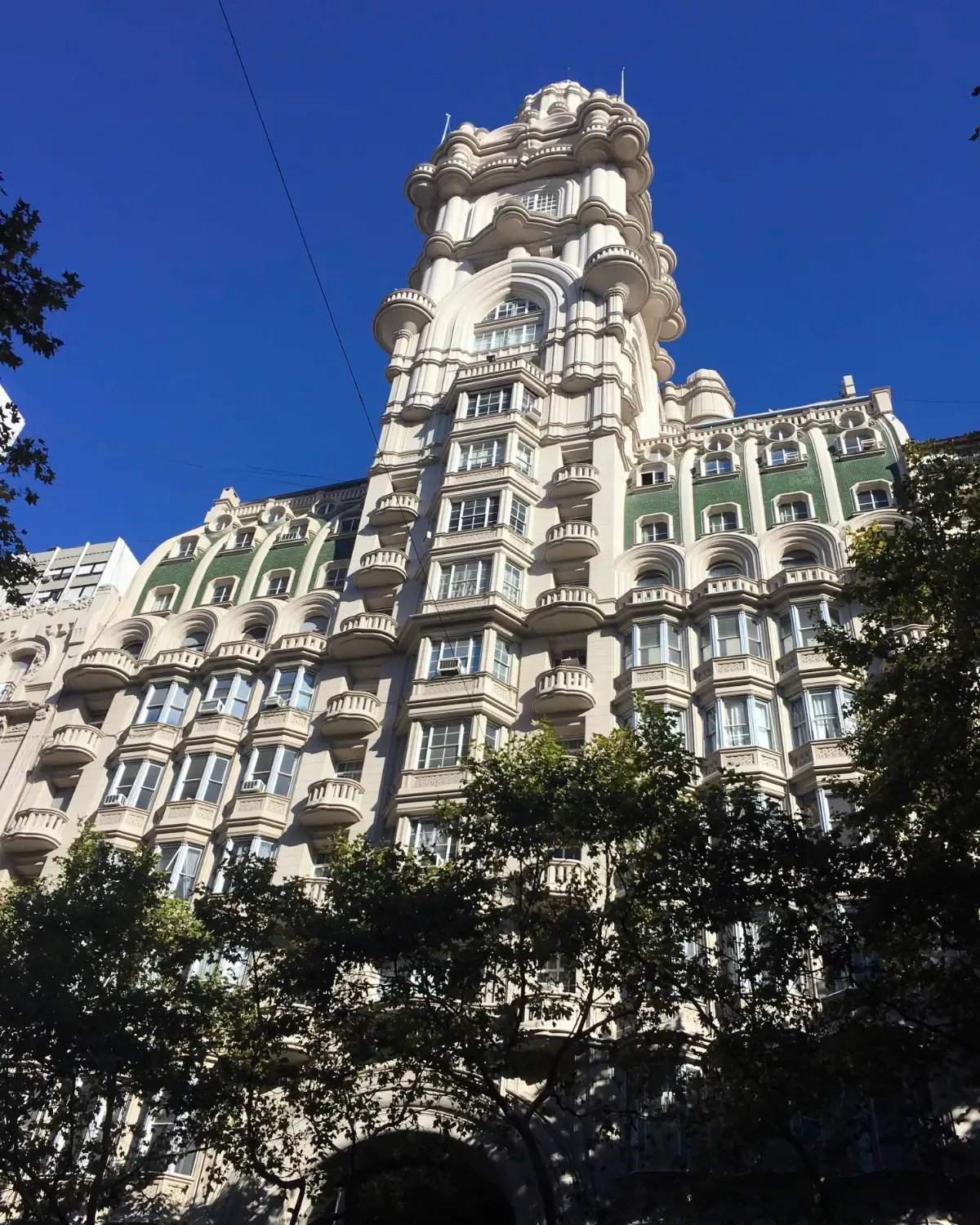
We walked this grand boulevard. Art Nouveau facades, eclectic styles, a cityscape that screams early 20th-century optimism.
Palacio Barolo
Inspired by Dante’s Divine Comedy, this building is structured around Heaven, Purgatory, and Hell. Architecturally stunning, thematically weird. The guide unpacked the symbolism. Worth it just for that.
The Eva Perón Mural
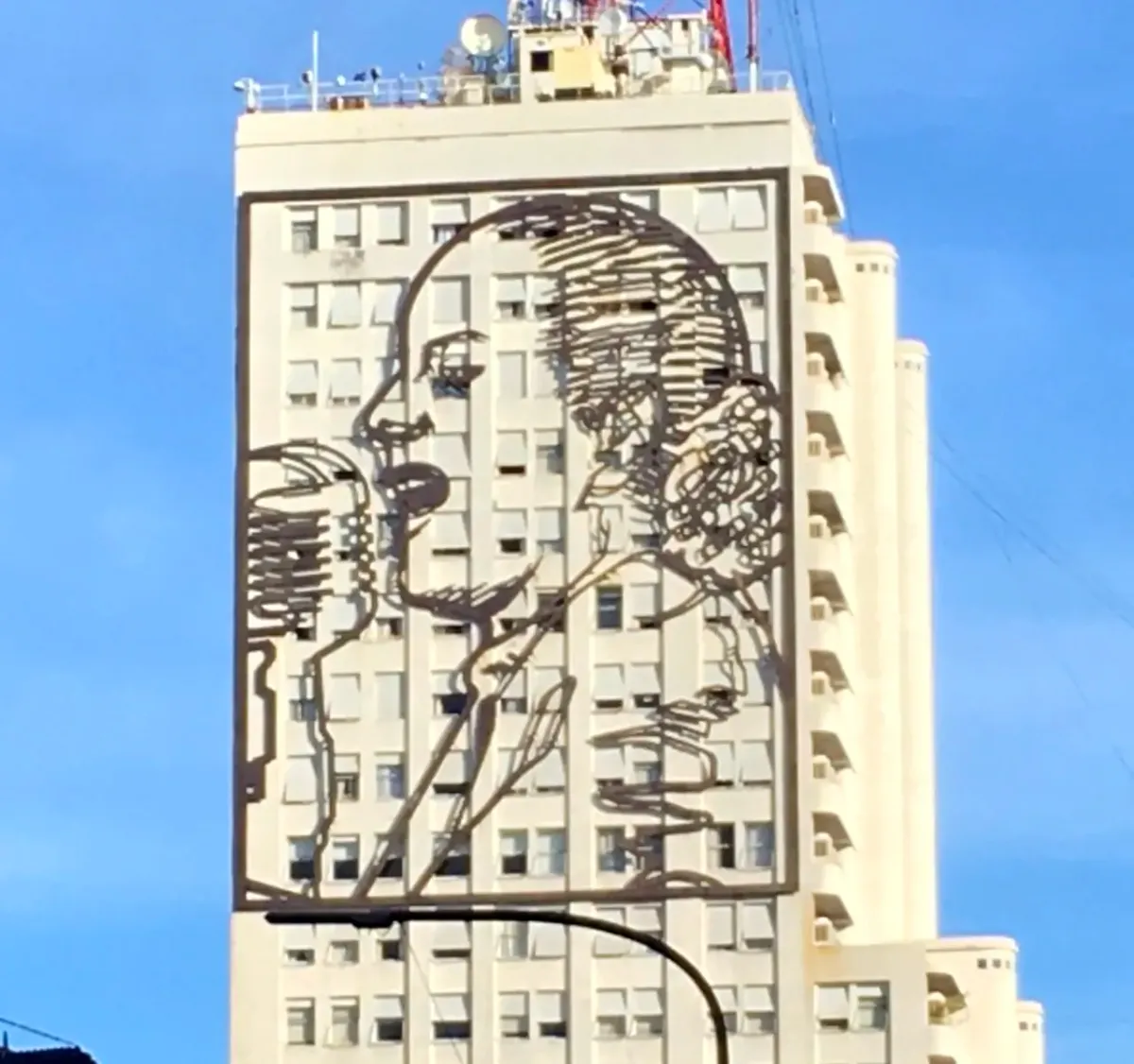
The iconic image on a ministry building. Love her or not, Evita is central to Argentine identity. The guide didn’t shy from complexity: her political legacy, her canonization by some, demonization by others. (I later visited her tomb in Recoleta Cemetery. Context from this tour made that visit far richer.) Read more here.
Café Tortoni
We paused outside this 1858 institution. No time to stop for coffee, but the guide framed its role as a cultural salon for writers, artists, politicians. I made a mental note to return, though I never did. (Next time.) (Read about the El Ateneo Bookstore, also famous for its design).
The Metropolitan Cathedral
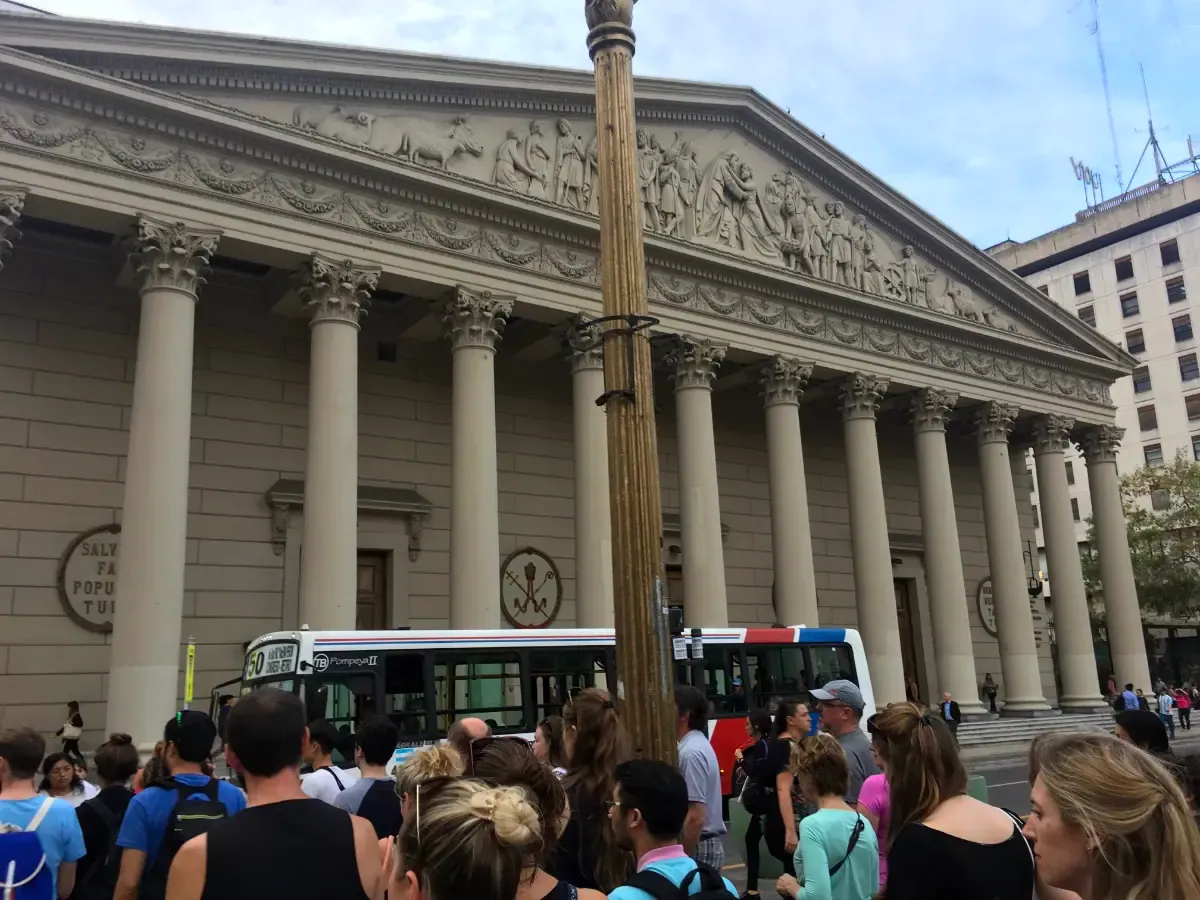
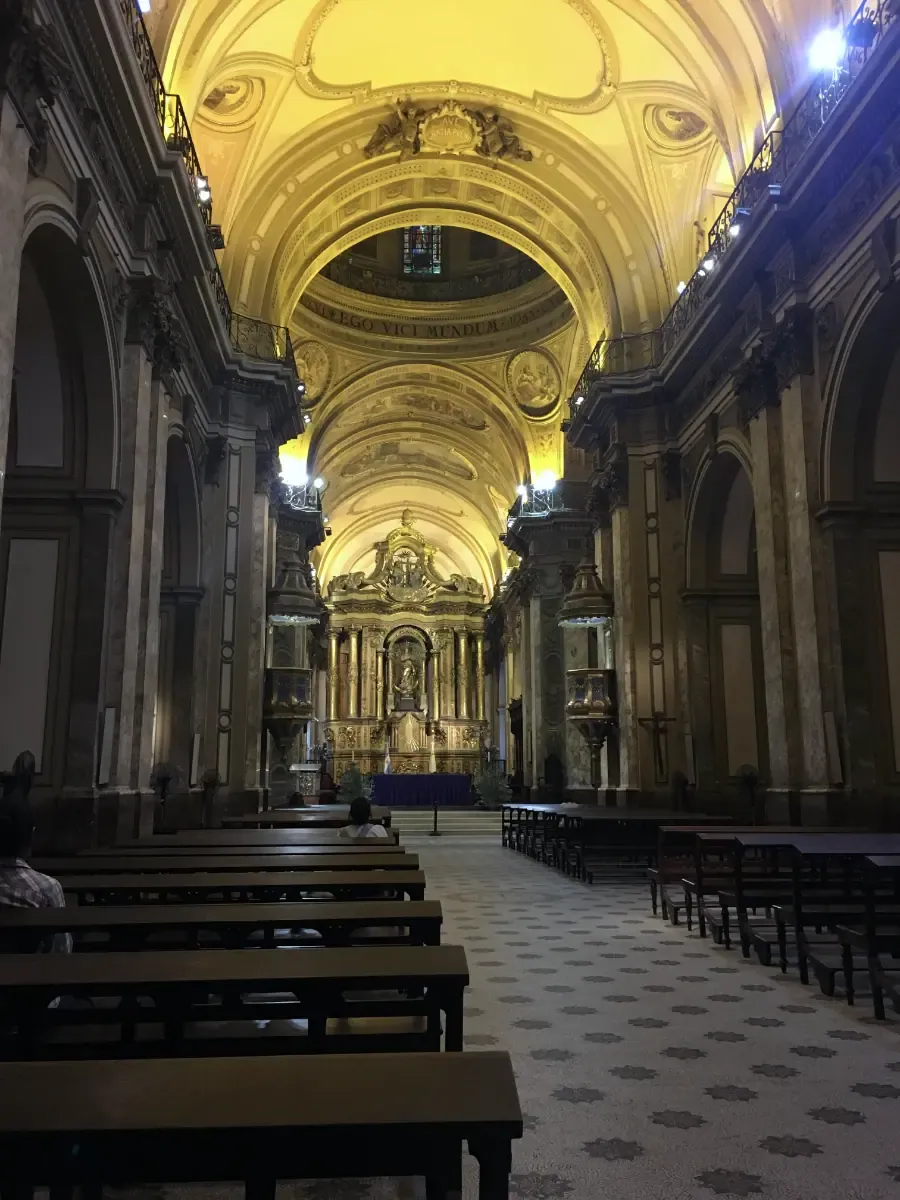
Grand, heavy, unexpectedly moving inside. We stepped in briefly. Mosaics, stained glass, the tomb of General José de San Martín (Argentina’s liberator, guarded by cavalry). A moment of quiet before the final stop.
Plaza de Mayo
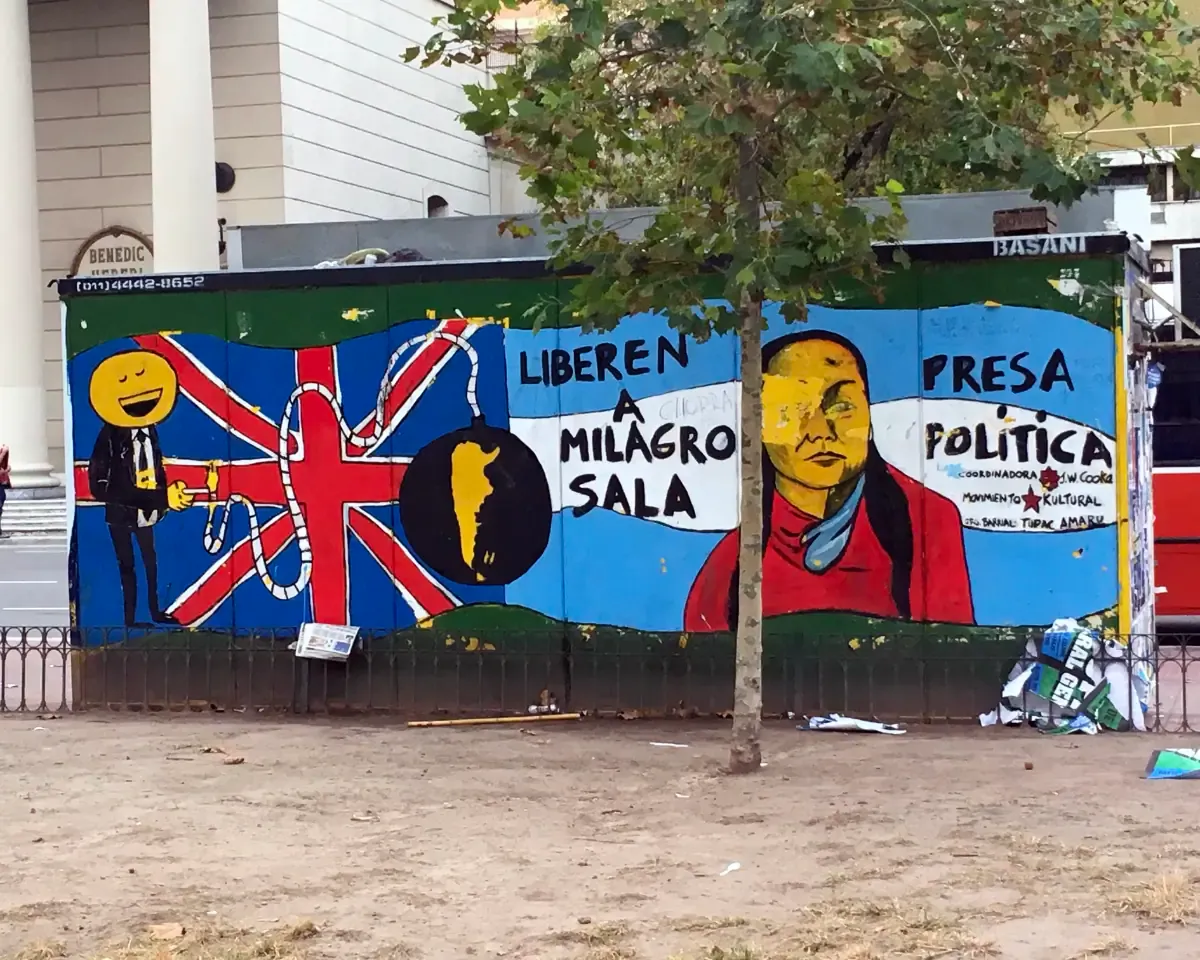
The tour ended here: the heart of Argentine political life. Casa Rosada (the pink presidential palace), the site of protests, celebrations, and the Madres de Plaza de Mayo circling the pyramid every Thursday demanding answers about their disappeared children during the dictatorship.
We arrived during a small protest. I’ll admit I felt uneasy. I’m not used to public demonstrations. But the guide explained this is civic engagement, not chaos. Plaza de Mayo is designed for this. That reframing helped.
What Worked (and What Didn’t)
What I Valued
Depth over breadth: The guide didn’t rush. She answered questions, lingered at meaningful spots, and treated us like adults capable of handling complexity.
Local perspective: This wasn’t generic tourist script. She had opinions, personal stories, and a clear sense of what matters to porteños.
Practical intelligence: Where to eat, which neighborhoods to explore, what scams to avoid (the mustard trick on public transport is good to know).
Social opportunities: I chatted with an Australian couple about their Patagonia plans and swapped restaurant recommendations with two Americans. Low-pressure, useful.
What Could Be Better
Group size: Fifteen is manageable, but I’ve heard of tours with 30+. That’s too many. Book early in the day or off-season for smaller groups.
Heat and hydration: Buenos Aires in summer is brutal. I underestimated this. Bring water, a hat, and sunscreen. The tour doesn’t pause for café breaks.
Protest anxiety: If you’re skittish about crowds or political demonstrations, Plaza de Mayo might rattle you. Ask your guide beforehand if protests are likely that day.
Other Free Walking Tours Worth Considering
Buenos Aires Free Walks runs multiple tours daily:
Recoleta & Retiro Tour (Afternoons, 2 hours) Focuses on the aristocratic north: grand mansions, Recoleta Cemetery (where Evita is buried), and the cultural elite’s legacy. If you’re interested in architecture and social history, this pairs well with the city center tour.
La Boca Tour (Mornings) Covers the colorful Caminito street, immigrant history, and football culture. La Boca can feel touristy and requires caution beyond the main street. Doing it with a guide makes sense.
Palermo Graffiti Tour Explores street art in Palermo, Buenos Aires’ creative, younger neighborhood. If you’re into contemporary culture and want a break from colonial history, this is the one.
San Telmo Tour Sundays coincide with the famous antiques market. Cobblestone streets, bohemian history, tango roots. A solid choice if you’re staying in San Telmo.
I only did the city center tour due to time, but if I’d had another day, I’d have done Recoleta next.
Alternatives: When a Paid Tour Makes More Sense
Free walking tours are excellent for orientation, but they’re not the only option. Sometimes they’re not the best option.
Consider a private guide if:
You want a customized route (e.g., focusing only on architecture, Jewish Buenos Aires, or political history)
You’re traveling with mobility considerations
You prefer a smaller, more intimate experience
You want door-to-door pickup and flexibility to pause for coffee
Expect to pay: $80-150 USD for a private half-day tour. Worth it if you value personalized pacing and niche expertise.
Food tours: If you’re more interested in Buenos Aires’ culinary scene than political history, skip the walking tour and book a food tour in Palermo or San Telmo ($60-90 USD). You’ll eat well, learn about local ingredients, and still get neighborhood context.
Self-guided walks: Perfectly viable if you’ve done your research. Download a route (plenty of blogs offer free itineraries), bring a map, and explore at your own pace. You’ll miss the storytelling, but you’ll gain freedom.
For me, the free walking tour was the right call on day one. It gave me the framework I needed to make smarter choices for the rest of my trip.
Practical Tips for Getting the Most Out of Your Tour
Book ahead (even though it’s “free”): Walk-ups are allowed, but booking online at buenosairesfreewalks.com guarantees your spot and helps organizers plan group sizes.
Arrive 10 minutes early: Guides leave on time. Miss the start, miss the tour.
Bring cash in small bills: USD or pesos work for tipping. Don’t expect guides to break a $100 note.
Wear comfortable shoes: You’ll walk 3-5 km over uneven pavement, cobblestones, and occasional broken sidewalks.
Hydrate: Especially in summer (Dec-Feb). Buenos Aires gets hot and humid. Bring a refillable bottle.
Ask questions: The guides are knowledgeable. If you’re curious about something, speak up. That’s what you’re there for.
Stay aware: Pickpocketing happens in crowded spots (Avenida de Mayo, Plaza de Mayo). Keep bags zipped, phones pocketed, and valuables in a cross-body bag or money belt.
Don’t expect café breaks: These tours move. If you need coffee, go afterward.
Is It Worth Your Time?
Yes, if you’re arriving in Buenos Aires without deep background knowledge and want an efficient, low-cost way to get oriented.
No, if you’ve already spent significant time researching the city, prefer complete independence, or want a highly customized experience.
For me, as a 50+ solo traveler who values smart budgeting and quality information, the Buenos Aires Free Walks city center tour was absolutely worth it.
I spent $10, gained three hours of historical context, met fellow travelers, and left with a mental map of where to go next. That’s value.
Would I do another free tour on a return visit? Probably not. I’d book a private guide focused on a niche topic (Argentine wine, modernist architecture, or tango history). But for first-timers, this is the move.