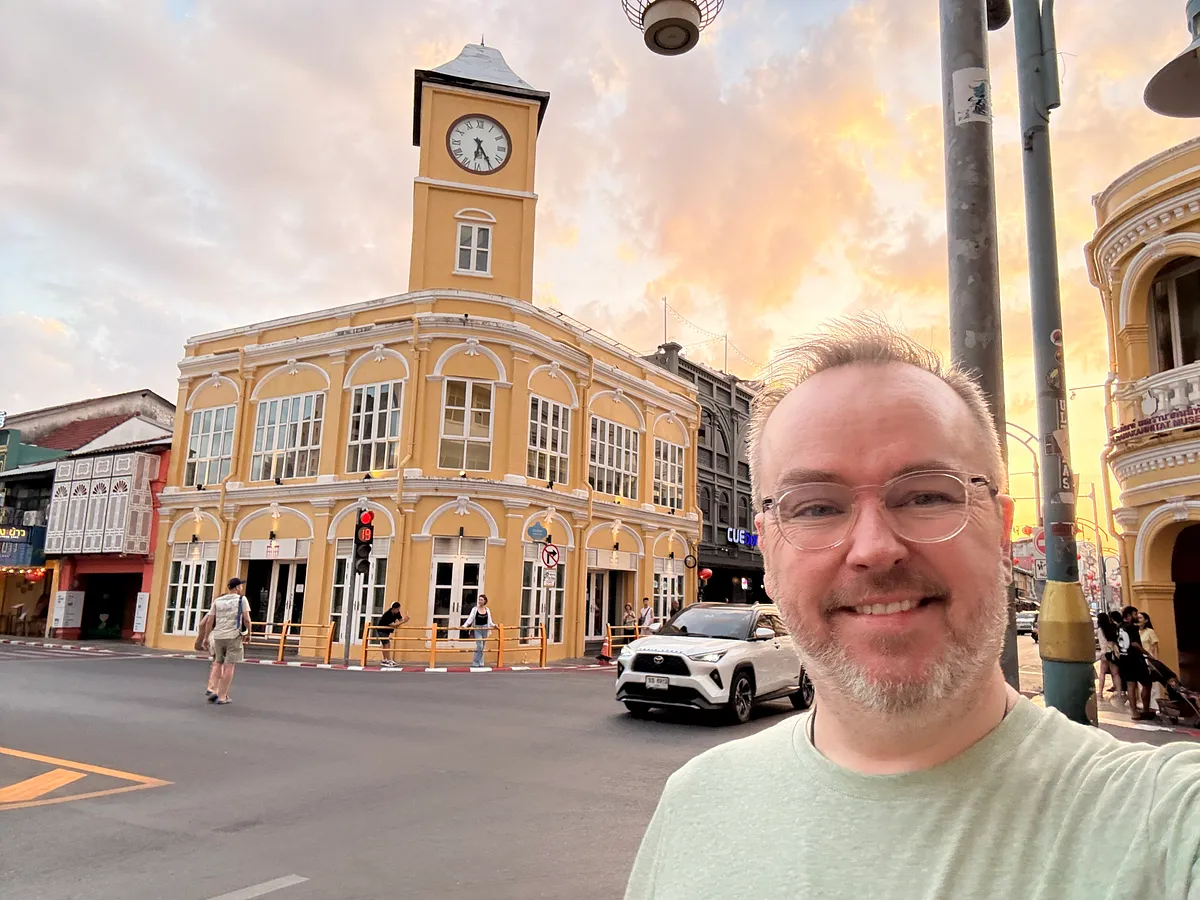
Where to Stay Solo in Chiang Mai 2026: Quiet Areas & Hotels

Chiang Mai in 2026 is facing a perfect storm. The new Destination Thailand Visa has unleashed a wave of digital nomads hunting month-long rentals, while tourism is projected to hit 35 million visitors. High-season bookings are already tight, and the government crackdown on unlicensed short-term rentals in condos has squeezed supply further. If you’re planning to visit late 2026, book now, or risk paying premium rates for mediocre rooms.
I spent a month here in a well-placed hotel in Nimman that balanced comfort with value, set back from chaos around Maya and One Nimman (shopping district) but close enough to walk to restaurants and services. Chiang Mai delivers what Bangkok can’t: manageable scale, jungle-edge calm, and restaurants where a Michelin-recommended meal costs less than a London sandwich. This guide focuses on neighborhoods that won’t sell out, hotels offering real value, and how to navigate the 2026 crunch without compromise.
Quick Overview: Where to Stay in Chiang Mai 2026
Nimmanhaemin – Digital nomad central with co-working cafés, mid-range hotels, and walkable dining; book early for high season.
Santitham – Residential calm, cheaper than Nimman, excellent street food, fewer tourists.
Huay Kaew – Jungle-edge quiet, quick access to Doi Suthep, greener and cooler at night.
Old City – Temple-hopping convenience but expect crowds, noise, and inflated prices in 2026.
Wat Ket – Local markets, Michelin street food, authentic vibe, limited hotel stock.
Quick Comparison: Chiang Mai Neighborhoods 2026
Staying in Nimmanhaemin (Nimman)
Nimman is where Chiang Mai’s digital nomad economy thrives. Co-working spaces, specialty coffee roasters, and mid-range hotels cluster along Nimmanhaemin Road and its side sois. The vibe is less backpacker chaos, more laptop-and-latte productivity. You’ll find reliable Wi-Fi, English menus, and a density of restaurants that means you can eat out three times a day for a month without repeating. Book three months ahead if you’re visiting November to February.
The neighborhood balances convenience with breathing room. You’re a 10-minute songthaew ride from the Old City temples but far enough that you won’t hear tuk-tuk horns at 2 a.m. Avoid the main road itself for accommodation: pick a side soi for quieter nights and better value.
Best Hotels in Nimmanhaemin
InterContinental Chiang Mai [Check Availability →] – One of the best new hotels Chiang Mai has welcomed, with jungle-view rooms, rooftop bar, and a spa that justifies the 5,000+ THB rate. Book direct for an included breakfast.
The Twenty Lodge [Check Availability →] – Mid-range favorite with nomad-friendly design, strong Wi-Fi, and a rooftop pool. Quiet soi location, walkable to everything.
Check all hotels and prices in Nimmanhaemin →
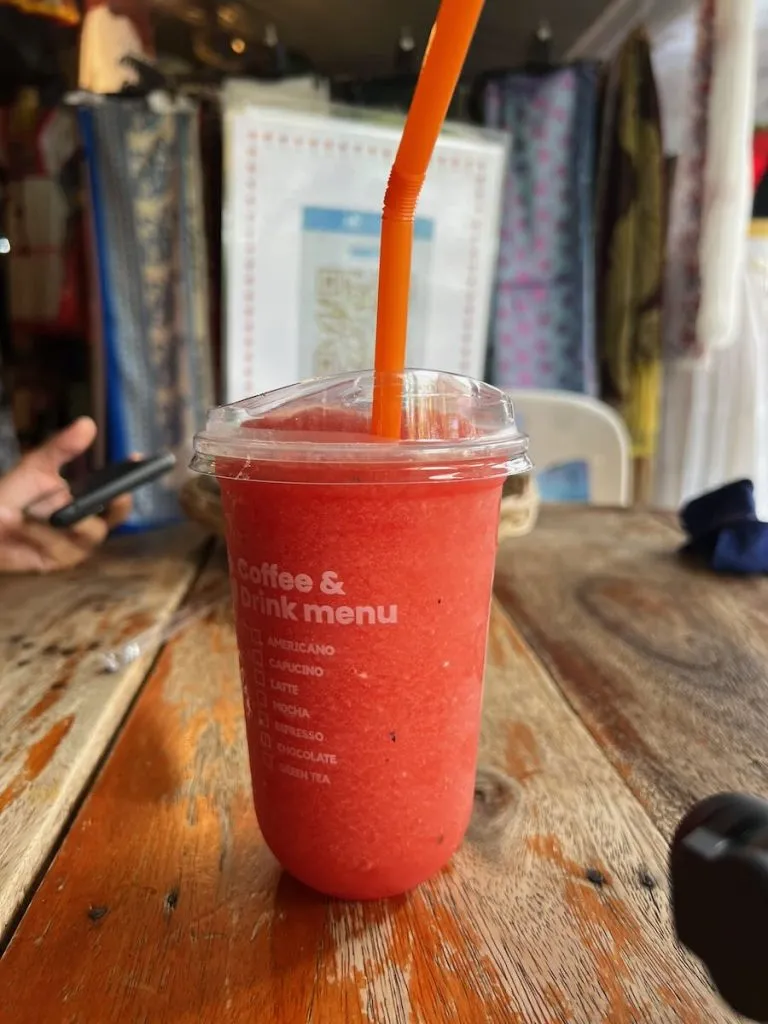 An ice cold watermelon smoothie in Chiang Mai – © Patrick Hughes
Staying in Santitham
Santitham sits just north of Nimman and feels like a different city. Residential streets, family-run noodle shops, and a slower pace. You’ll see more Thai students than Western tourists, and prices drop 20–30% compared to Nimman for equivalent quality. The neighborhood lacks the polished café culture but compensates with authenticity: this is where you’ll find grandmothers grilling sai oua sausages on charcoal at 6 a.m. and monks collecting alms at dawn.
Accommodation here tends toward smaller guesthouses and three-star hotels. You won’t find international chains, but you will find clean rooms, helpful owners, and easy access to Nimman’s dining scene via a five-minute walk or songthaew. If you’re like me and planning a month-long stay and want to stretch your budget without sacrificing comfort, Santitham delivers. Book here if Nimman’s availability dries up for your dates; it’s the smart fallback for Chiang Mai digital nomad stays.
Best Hotels in Santitham
At Pingnakorn Huaykaew [Check Availability →] – Boutique property with Lanna-style architecture, garden courtyard, and breakfast included. Quiet, well-maintained, excellent value.
Vieng Mantra Hotel [Check Availability →] – Solid mid-range option with pool, helpful staff, and easy walking to Nimman. Reliable Wi-Fi, good for longer stays.
Check all hotels and prices in Santitham →
Staying in Huay Kaew (Jungle-Edge)
Huay Kaew runs west from Nimman toward the foothills of Doi Suthep. The air cools at night, the streets widen, and the jungle creeps closer. You’re still 10 minutes from Nimman’s cafés but gain proximity to hiking trails, waterfalls, and Chiang Mai Zoo. This is the neighborhood for solos who want a morning trail run before breakfast and a quiet balcony to work from in the afternoon.
Hotels here tend toward mid-range international brands: Novotel, Ibis, with predictable comfort and fewer surprises. The trade-off is less street food density and more reliance on songthaews or Grab for dining variety. If you’re planning day trips to Doi Suthep or the Hmong villages, Huay Kaew cuts 20 minutes off your travel time. It’s also quieter during Chiang Mai high season bookings pressure because tourists cluster in the Old City and Nimman.
Best Hotels in Huay Kaew
Novotel Chiang Mai Nimman Journeyhub [Check Availability →] – Modern chain hotel with co-working lounge, rooftop pool, and jungle views. Reliable for solo business travelers. (I have stayed here and I found it super convenient for Maya).
Kantary Hills Hotel [Check Availability →] – Apartment-style suites with kitchenettes, good for weekly stays. Quiet, green surroundings, less walkable but peaceful.
Check all hotels and prices in Huay Kaew →
Staying in the Old City
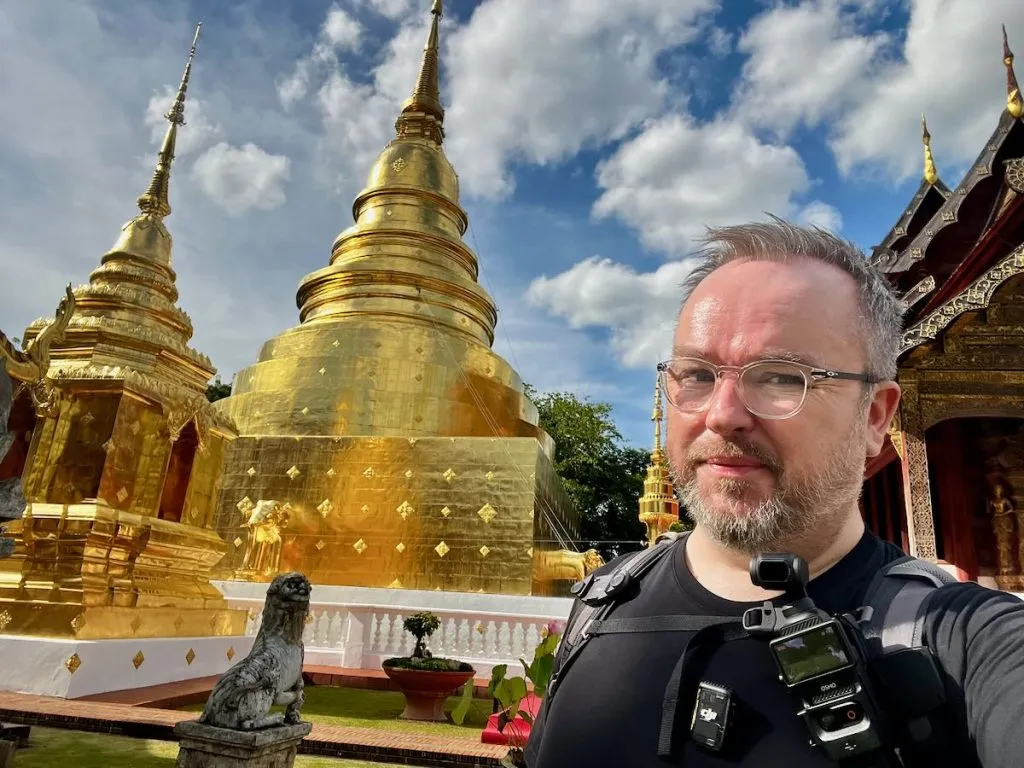 A visit to the temples in Chiang Mai Old City – © Patrick Hughes
The Old City is Chiang Mai’s postcard: moat-ringed temples, night markets, and tuk-tuks idling at every corner. It’s convenient for first-time visitors who want to tick off Wat Phra Singh and Wat Chedi Luang in a single afternoon. But in 2026, expect crowds, noise, and inflated prices. The surge in visa-visitors hasn’t hit here as hard: nomads prefer Nimman’s Wi-Fi, but tourism numbers are climbing, and the Old City absorbs the overflow.
Stay here if you’re visiting for three days, not three weeks. Hotels range from budget guesthouses to boutique properties, but quality is madly inconsistent. You’ll pay Old City premiums for rooms that would cost 30% less in Santitham. The advantage is walkability: temples, markets, and restaurants cluster within a one-kilometer square. The disadvantage is constant tuk-tuk solicitation and limited quiet. Book a room facing an interior courtyard, not the street; this is essential when navigating the wildness of Chiang Mai occupancy trends during peak months.
Best Hotels in the Old City
Rachamankha Hotel [Check Availability →] – Boutique luxury with temple-inspired design, library lounge, and serene courtyard. Worth the splurge for a special occasion.
BED Phrasingh [Check Availability →] – Budget-friendly hostel-hotel hybrid with private rooms, rooftop terrace, and social vibe. Clean, central, good for short stays.
Staying in Wat Ket
Wat Ket sprawls east of the Ping River and rarely appears in guidebooks. That’s kind of its appeal. This is where Chiang Mai locals shop for produce at Ton Lamyai Market, queue for Michelin Bib Gourmand dumplings at Lung Khajohn, and live their daily routines without tourist interference. Accommodation is sparse, mostly small guesthouses and budget hotels, but if you want to experience the city as residents do, Wat Ket delivers.
The trade-off is convenience. You’re a 15-minute songthaew ride from Nimman and the Old City, and English signage is rare. But food is exceptional and cheap: khao kriab pak moh dumplings for 40 baht, yen ta fo noodles for 60 baht, and sai oua sausages grilled to order. Stay here if you’re confident navigating without Google Translate handholding and prioritize culinary immersion over polished hotel amenities. For those researching DTV visa Chiang Mai rentals, this area offers some of the most affordable short-term rentals Chiang Mai has available.
Best Hotels in Wat Ket
The Cabin Backpackers Hostel [Check Availability →] – Budget hostel with private rooms, riverside terrace, and local market proximity. Basic but clean.
At Niman Conceptual Home [Check Availability →] – Small boutique guesthouse with garden, breakfast, and quiet location. Good for solo travelers seeking local flavor.
Getting Around Chiang Mai
Songthaew (red trucks): Shared taxis running fixed routes. Flag one down, tell the driver your destination, pay 30–50 baht. Efficient for short hops between neighborhoods.
Grab: Ride-hailing app works well in Chiang Mai. Cheaper than tuk-tuks, transparent pricing, English interface. Download before arrival.
Tuk-tuks: Negotiate fares before boarding: expect 100–200 baht for Old City to Nimman. Overpriced but convenient late at night.
Bicycle/scooter rental: Many hotels offer bikes; scooters rent for 200–300 baht/day. Traffic is manageable outside rush hour. International license required for scooters.
Walking: Nimman, Santitham, and the Old City are walkable. Huay Kaew and Wat Ket require wheels.
Light rail (planned 2026): Expansion underway but not operational for most of 2026. Don’t rely on it for planning.
Is Chiang Mai Safe?
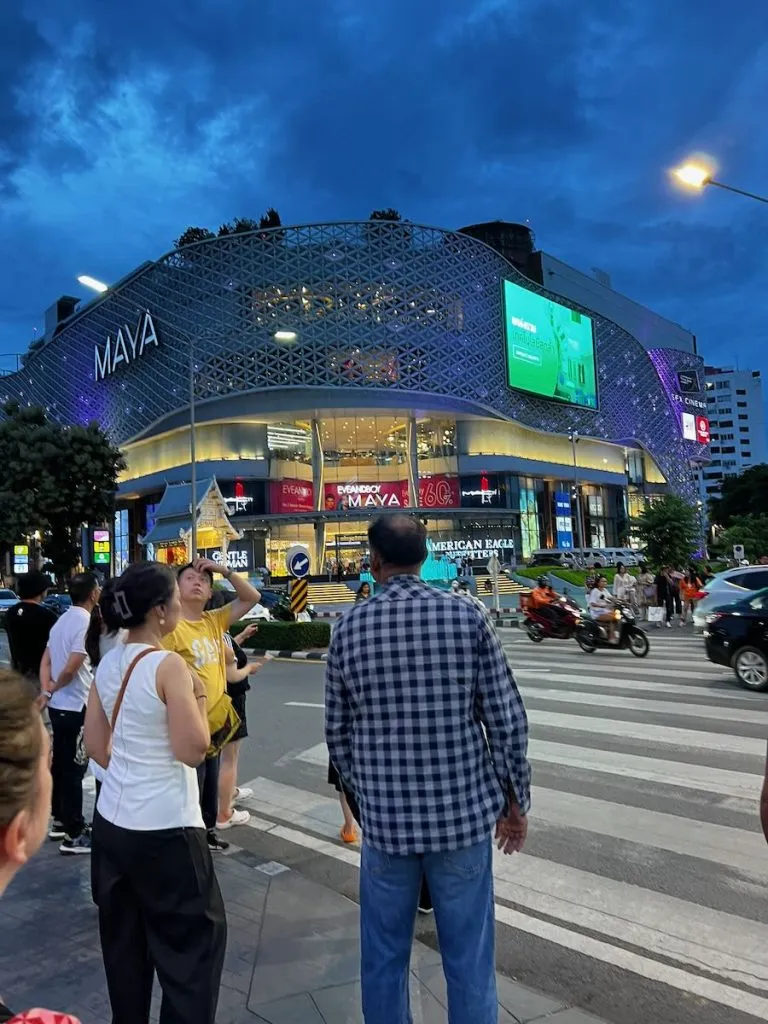 Chiang Mai Maya Mall at dusk – perfect for a solo dinner – © Patrick Hughes
Yes. Chiang Mai is one of Southeast Asia’s safest cities for solo travelers. Violent crime is rare, and scams are less aggressive than in Bangkok or Phuket. The most common issues are overcharging by tuk-tuk drivers (negotiate fares upfront) and bag snatching from motorbikes (wear bags across your body, not dangling).
Traffic is the bigger risk. Scooter accidents spike during high season when inexperienced riders rent bikes. If you’re not confident on two wheels, stick to Grab or songthaews. Avoid riding after dark, street lighting is poor outside the Old City and Nimman.
Solo dining is completely normal. You’ll see Thai locals eating alone at street stalls and restaurants. No one will question a solo traveler ordering a full meal. If you’re concerned about language barriers, download Google Translate’s offline Thai pack and screenshot menus. Most mid-range and upscale restaurants have English menus.
Frequently Asked Questions
What is the best area to stay in Chiang Mai for Solo visitors?
Nimmanhaemin balances walkability, dining variety, and hotel quality. You’re close to temples, markets, and co-working spaces without the Old City’s tourist density. Book early for high season.
How far in advance should I book accommodation for Chiang Mai in 2026?
Three months minimum for November–February (high season). The DTV visa boom and STR crackdown have tightened supply. Shoulder seasons (March–May, September–October) allow shorter lead times.
Is Airbnb a good option for Chiang Mai in 2026?
Risky. The government crackdown on unlicensed condos means many listings may be canceled last-minute. Stick to licensed hotels or villas with verified reviews. Monthly rentals in licensed buildings are safer than short-term condo stays.
What’s the average cost of a mid-range hotel in Chiang Mai?
2,000–4,000 THB per night (roughly $55–$110 USD) for a three- or four-star hotel with pool, Wi-Fi, and breakfast. Luxury properties start at 5,000 THB but often discount during shoulder seasons.
Do I need to speak Thai to get around Chiang Mai?
No, but basic phrases help. Nimman and the Old City have widespread English. Santitham and Wat Ket require more patience and Google Translate. Download offline maps and translation apps before arrival.